Wednesday, December 16, 2009

Monday, December 14, 2009
Convert each fraction to a decimal number. Round each decimal number to the indicated place value then convert to a percent.
a)27/56 (tenths)
0.4821428
0.5
60%
b) 125/396 (thousandths)
0.3156565
0.316
31.6%
c) 1496/2005 (hundredths)
0.746134663
0.75
35%
Repeating decimal:
A decimal number with digit or group of digits that repeats forever.
- repeating digits are shown with a bar.

eg. 0.777777.... = 0. Bar 7

Use calculator to convert these fractions to a repeating decimal.
a) 1/3
0. bar 3
b) 5/9
0. bar 5
c) 5/6
0.8 bar 3
Terminating decimal:
- a decimal number in which the digits stop.
-examples include 0.4, 0.86, 0.125
0.75 seventy-five
hundredths
75/100 = 3/4
HOMEWORK
a) 28 out of 8 b) 421 out of 560
Change each terminating decimal to a fraction.
Simplify the expression
(2+1) 2+ 3x4 2 divided by 2
Construct an angle bisector of a 60 degrees angle.
0.4821428
0.5
60%
b) 125/396 (thousandths)
0.3156565
0.316
31.6%
c) 1496/2005 (hundredths)
0.746134663
0.75
35%
Repeating decimal:
A decimal number with digit or group of digits that repeats forever.
- repeating digits are shown with a bar.

eg. 0.777777.... = 0. Bar 7
Use calculator to convert these fractions to a repeating decimal.
a) 1/3
0. bar 3
b) 5/9
0. bar 5
c) 5/6
0.8 bar 3
Terminating decimal:
- a decimal number in which the digits stop.
-examples include 0.4, 0.86, 0.125
0.75 seventy-five
hundredths
75/100 = 3/4
HOMEWORK
a) 28 out of 8 b) 421 out of 560
Change each terminating decimal to a fraction.
Simplify the expression
(2+1) 2+ 3x4 2 divided by 2
Construct an angle bisector of a 60 degrees angle.
Tuesday, December 8, 2009
Difference
The "Whole Numbers" that are between 7 and 13 are :
8, 9, 10, 11, and 12

The difference between 13 and 7 is 6
Half this difference is 3
6 divided by 2 = 3
The number ID is halfway between 7 and 13
7 + 3 = 10 or 13 - 3 = 10
If you still don't understand this information try and solve these questions that we did during class.
1. What are the whole numbers between 68 and 72, 108.3 and 111.6
Answer : 69, 70, and 71 Answer : 109, 110, and 111
2. What number is halfway between the given numbers? a. 70 and 170 b. 1801 and 1813 c.18.4 and 6.2.
Answers : a.120 b.1807 c.12.3
3. Is the number in the middle closer to the left number or the right number?
30/38/40 0.6/3.4/6.6 0.891/0.732/0.641 78.68/78.22/77.77
Right Left Right Right
definitions
Whole Number - a whole number is a number without a decimal ; must also not have any place value below 0, for e.g. tenths, hundredths, thousandths, etc.
Between - anything in the middle of things. for e.g. my desk is between Diana and Kathryn in math.
Difference - how many numbers it takes to get from one number to another. 7 and 13 would be 6 because it goes 7,8,9,10,11,12,then 13, 6 numbers to get from one to the other.
Halfway - a word used to describe something that is divided into 2 equal parts.
Pictures drawn on paint by me, Credits to my cousin Alvin for showing me how to do this better. Thanks Alvin.
Monday, November 30, 2009
"Area of a Triangle"
Triangle
Triangle:
A three sided figure
Have three angles
e.g.


A three sided figure
Have three angles
e.g.


Because triangle is half of a square, rectangle, or a parallelogram, the formula for finding the area of triangle is Base x Height divided by two.

or area= 45 meters squared
Here is some link to truelly understand how to finding the area of a triangle:
http://www.youtube.com/watch?v=xz6gBA0M9FY&feature=related

or area= 45 meters squared
Here is some link to truelly understand how to finding the area of a triangle:
http://www.youtube.com/watch?v=xz6gBA0M9FY&feature=related
Wednesday, November 25, 2009
Area
Areas - the number of square units contained in a two dimensional shape
this square has an area of 4 square units
Area is the surface space a shape takes up.
Area of square or rectangle
Length x Width= area
L x W= area
 eg.
area=L x W
area= 6x3
=18cm2
Parallelogram - a four sided figure with opposite sides parallel and equal
eg.


Base(b) - a side of two-dimensional closed figure(sh ape)
Height(h) - the perpendicular distance from the base to the opp osite side.
Base(b) is 5cm and height(h) is 3cm. Plug those value into the formula
A=b x h
A=5 x 3
A=15cm2
F ind the area of this parallelogram
 Find the area of this parallelogram
A=b x h
A=12 x 4
A=48m squared
Homework:


this square has an area of 4 square units
Area is the surface space a shape takes up.
Area of square or rectangle
Length x Width= area
L x W= area
 eg.
area=L x W
area= 6x3
=18cm2
Parallelogram - a four sided figure with opposite sides parallel and equal
eg.


Base(b) - a side of two-dimensional closed figure(sh
 ape)
Height(h) - the perpendicular distance from the base to the opp
 osite side.
Base(b) is 5cm and height(h) is 3cm. Plug those value into the formula
A=b x h
A=5 x 3
A=15cm2
F
 ind the area of this parallelogram
 Find the area of this parallelogram
A=b x h
A=12 x 4
A=48m squared
Homework:

Monday, November 23, 2009
Angles
Angles - space between 2 connecting lines

Acute - an angle that is less than 90°

Obtuse- an angle that is greater than 90°and less than 180°

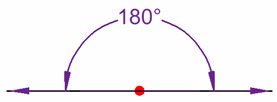
angle bisector-the line that divides an angle into 2 equal parts
-equal angles are not mark with the same symbol
How to make an angle bisector
Method 1
1. use compass make an arc from the vertex that crosses both arms label them X and Y.
2. make an arc from point X and Y they must be equal size.
3. draw a line from point B to the arc intersection.

Method 2
1. use protractor measure the angle D,E,F .
2. divide your measurement by two.
3. make at 54 using protactor labelled Q
y) Join point Q with a straight line.

Wednesday, November 18, 2009
How to make Perpendicular lines.
Bisect
Bi- means two
Sect- means to cut
So bisect means to cut in two.
Directions:
1. Draw a line
2. Fold so pt A is on top of pt B.
3. Use a ruler to draw a line in the crease made by the fold.
4. Label the point where the two lines segments intersect P.
5. Measure the lengths of AP and BP
What do you noticed?
7. Use a protractor to measure the 4 angles created.
What do you notice? they are all 90*
You have created a perpendicular bisector
- a line that divides another line segment in half and is at right angles to it.
-equal line segments are marked with " hash" marks.


use a right triangle
1. Find the length of the line segment.
2. Determine the half way point.
3. Use right triangle to create a perpendicular line.
3rd way to make a perpendicular bisector.
use compass.

step one: make an arc from point A is greater then half way.
step two: make an equal sized arc intersections with a straight line, that line is a perpendicular bisector.
Draw a 12cm line segment label it PQ. Draw the perpendicular bisector of this line segment, all three was. Label the point where they intersect R.
a. what are the lengths of PR and PR?
b. what does it mean if the lengths are different?
Bi- means two
Sect- means to cut
So bisect means to cut in two.
Directions:
1. Draw a line
2. Fold so pt A is on top of pt B.
3. Use a ruler to draw a line in the crease made by the fold.
4. Label the point where the two lines segments intersect P.
5. Measure the lengths of AP and BP
What do you noticed?
7. Use a protractor to measure the 4 angles created.
What do you notice? they are all 90*
You have created a perpendicular bisector
- a line that divides another line segment in half and is at right angles to it.
-equal line segments are marked with " hash" marks.

use a right triangle
1. Find the length of the line segment.
2. Determine the half way point.
3. Use right triangle to create a perpendicular line.
3rd way to make a perpendicular bisector.
use compass.

step one: make an arc from point A is greater then half way.
step two: make an equal sized arc intersections with a straight line, that line is a perpendicular bisector.
Draw a 12cm line segment label it PQ. Draw the perpendicular bisector of this line segment, all three was. Label the point where they intersect R.
a. what are the lengths of PR and PR?
b. what does it mean if the lengths are different?
Subscribe to:
Posts (Atom)